Source transistor igbt withstanding voltage tester for testing, calibration, and maintenance
Find 30 listings for the transistor igbt withstanding voltage tester to compare specifications like output voltage, capacity, and certifications. Buyers can evaluate models such as CYSY-310E and DDJZ-30KVA for electrical insulation testing needs.
Key considerations
Products List


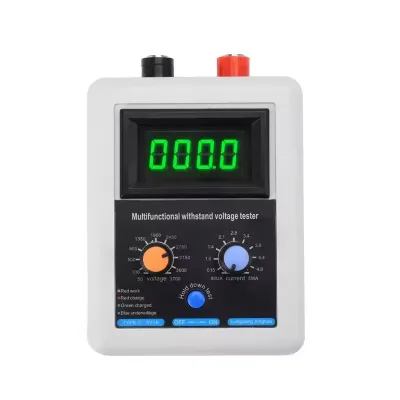


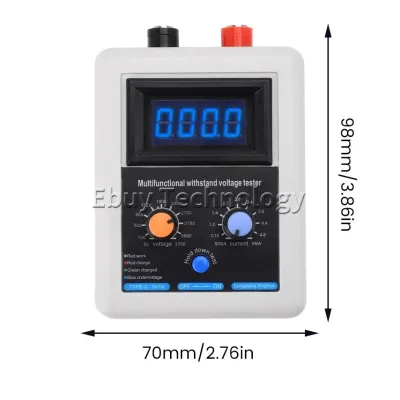


Comprehensive Sourcing Guide
Transistor IGBT Withstanding Voltage Tester Sourcing Guide
The procurement of a transistor IGBT withstanding voltage tester requires a precise understanding of the specific electrical stress tests required for semiconductor validation. These devices are essential for verifying the dielectric strength of high-voltage components, ensuring they can withstand transient surges and continuous operating voltages without failure. Buyers must recognize that the market offers a spectrum of solutions ranging from basic AC/DC hipot testers to advanced impulse withstanding voltage systems capable of generating complex waveforms like the 1.2/50microsec standard. Selecting the right unit depends heavily on whether the primary need is routine insulation testing or rigorous impulse testing for high-power IGBT modules.
Sourcing decisions must be grounded in the specific technical parameters observed in current listings, such as output voltage ranges extending from 0.5kV up to 300kV and capacity ratings that vary significantly by model. The observed product data indicates a diverse inventory including models like the CYSY-310E, TTL-V, and DDJZ-30KVA/300KV, each serving different voltage and current requirements. A buyer must align their internal testing protocols with the available output capabilities, noting that some units offer adjustable voltages up to 5kV while others are designed for high-voltage impulse applications. This alignment ensures that the purchased equipment can effectively validate the insulation integrity of the specific transistor types being manufactured or tested.
Product Scope and Observed Listing Signals
The product scope for these testers encompasses a wide array of configurations, from compact units with weights between 0 and 100kg to larger industrial systems housed in wooden cases or aluminum boxes. Listings frequently highlight specific attributes such as the power source, which is predominantly AC220V±10V, and supply frequencies of 50/60Hz, indicating compatibility with standard industrial power grids in various regions. The physical packaging, often described as wooden boxes with wrapping film or aluminum boxes inside plywood cases, suggests that these are heavy-duty instruments requiring robust protection during transit, a factor that influences logistics planning and total landed cost.
Buyers should observe that the market signals a mix of single-item selling units and bulk-capable systems, with observed minimum order quantities (MOQ) ranging from 1 to 240 units. The presence of customization options and competitive unit pricing suggests a flexible supply chain capable of adapting to specific buyer needs, whether for a single laboratory setup or a large-scale production line deployment. However, the variation in product models, such as the GLDL-404 or WVT 255, implies that buyers must carefully cross-reference model numbers with their specific testing requirements rather than assuming all listed units share identical performance characteristics.
Technical Specifications to Verify
Verification of technical specifications is critical, particularly regarding the output voltage range and the nature of the voltage waveforms generated. The observed data points to output capabilities ranging from 0.5kV to 12kV for certain models, while others support high-voltage impulse testing up to 300kV with specific waveforms like 1.2/50microsec. Buyers must confirm that the selected unit's leakage current rating, observed in the range of 0 to 600mA, aligns with the safety limits of the IGBTs being tested to prevent accidental damage during the verification process. Additionally, the impedance values, which may include 12ohm, 40ohm, or 500ohm, must be matched to the specific circuit characteristics of the test subject.
The accuracy grade of the equipment is another vital specification, with observed data indicating a grade of 0.5 for certain models, which is essential for precise measurement of breakdown voltages. Buyers should also verify the physical dimensions and weight constraints, as some units are designed for room temperature environments while others may have specific thermal requirements. The input power source consistency, typically AC220V, must be confirmed against the facility's power infrastructure to ensure stable operation, and the adjustable nature of the output voltage should be validated to ensure it covers the full range of test scenarios required for the specific IGBT types in question.
Compliance and Safety Documentation
Compliance and safety documentation form the backbone of a reliable procurement process, with observed listings citing standards such as ISO9001, ISO14001, and OHSAS18001 as evidence of quality management systems. These certifications indicate that the manufacturing processes adhere to international standards for quality, environmental management, and occupational health and safety, which is crucial for maintaining a safe working environment when dealing with high-voltage equipment. Buyers must request and verify these certificates to ensure that the supplier maintains a consistent level of quality control and that the equipment is produced in facilities that prioritize safety and regulatory adherence.
In addition to management system certifications, specific product safety standards like CE Mark and IEC60060-1, -2 are frequently referenced in the product data. These standards are particularly relevant for electrical insulation testing and high-voltage equipment, ensuring that the devices meet rigorous safety requirements for operation and testing. The availability of an ILAC Calibration Certificate is also a significant factor, as it provides traceable calibration data that validates the accuracy of the voltage and current measurements. Buyers should insist on seeing these specific documents to confirm that the equipment has been tested and calibrated according to recognized international protocols before deployment.
Cost Drivers and Commercial Terms
Cost drivers for transistor IGBT withstanding voltage testers are influenced by the complexity of the technology, the output voltage capacity, and the specific features such as impulse generation capabilities. The observed price range of 0.5 to 18,000 USD reflects the vast difference between basic AC/DC hipot testers and advanced impulse withstanding voltage systems capable of handling high kVA capacities. Buyers must evaluate the total cost of ownership, which includes not only the unit price but also the cost of specialized packaging, such as wooden cases or aluminum boxes, and the potential need for custom configurations that may incur additional charges.
Commercial terms such as delivery lead times and minimum order quantities play a significant role in the procurement strategy, with observed delivery times as short as within 5 days for certain models. The flexibility in MOQ, ranging from single items to 240 units, allows buyers to scale their procurement based on immediate needs or long-term production plans. However, the competitive nature of the pricing and the availability of customization options suggest that buyers should negotiate terms carefully, ensuring that the final agreement includes clear specifications on warranty, support, and the conditions under which the equipment can be returned or exchanged if it does not meet the verified technical requirements.
Supplier Qualification and Quality Control
Supplier qualification is paramount when sourcing high-voltage testing equipment, as the reliability of the device directly impacts the safety of the testing personnel and the integrity of the test results. Buyers should prioritize suppliers who demonstrate a clear origin, such as Wuhan, Shanghai, or Guangdong in China, and who provide verifiable evidence of their manufacturing capabilities through certifications like ISO9001. The condition of the products, often listed as "Original 100%," should be verified through third-party inspections or by requesting detailed photos and serial numbers to ensure that the equipment is not refurbished or counterfeit.
Quality control processes should be scrutinized to ensure that the supplier has robust procedures for testing and calibration before shipment. The presence of specific standards like CE and IEC compliance in the product data suggests that the supplier is aware of international safety requirements, but buyers must confirm that these standards are actively applied to every unit produced. Additionally, the availability of after-sales support, such as email contact for more details, indicates a level of engagement that is essential for troubleshooting and maintenance. Buyers should establish clear communication channels and verify the supplier's ability to provide technical support and spare parts to ensure long-term operational reliability.
Long-Term Procurement Checks
Long-term procurement checks involve establishing a framework for ongoing performance monitoring and maintenance of the transistor IGBT withstanding voltage testers. Buyers should implement a schedule for regular calibration and inspection to ensure that the equipment continues to meet the specified accuracy grades and output voltage ranges over time. The observed data regarding the product's origin and packaging suggests that environmental factors during storage and transport can affect the equipment, so buyers must ensure that the storage conditions, such as room temperature, are maintained to prevent degradation of the internal components.
Furthermore, buyers should maintain a detailed record of the equipment's performance history, including any deviations from the expected output voltage or leakage current values. This documentation will be invaluable for troubleshooting and for making informed decisions about future upgrades or replacements. The ability to customize the equipment and the availability of specific models like the YDQW-10kVA/100KV indicate that the market is dynamic, and buyers should stay informed about new technologies and standards to ensure their testing capabilities remain competitive and compliant with evolving industry requirements.
FAQs
What is the output voltage range for these testers?
The output voltage range is adjustable from 0 to 5 kV for standard models, while specific high-voltage variants offer a range of 0.5 to 12 kV. Some advanced impulse testers reach up to 100 kV or 300 kV depending on the model. This adjustability allows for precise testing of various electrical insulation components without requiring multiple fixed-output units.
Can these devices be customized for specific applications?
Yes, customization is available for many of these testing units to meet specific operational requirements. Buyers can often request adjustments to voltage output, impedance settings, or packaging formats. This flexibility ensures that the equipment aligns with unique production line needs or specialized electrical insulation testing protocols without compromising safety standards.
What certifications do these testers typically hold?
These testers commonly hold ISO9001, ISO14001, and OHSAS18001 certifications, ensuring quality and safety management. Many models also carry CE marks and comply with IEC60060-1, IEC61010, and IEC 60255-5 standards. Ilac Calibration Certificates are available for precise measurement verification, providing buyers with documented compliance for international trade and regulatory requirements.
How fast is the delivery time for these units?
Delivery is typically within 5 days for standard orders, ensuring rapid deployment for testing operations. This quick turnaround supports urgent procurement needs without significant delays. Buyers should confirm specific lead times with suppliers, as expedited shipping or custom configurations may alter the standard delivery window, though most stock items remain readily available for immediate dispatch.
What is the minimum order quantity for these testers?
The minimum order quantity ranges from 1 to 240 units, offering flexibility for both single-unit purchases and bulk procurement. This wide range accommodates small laboratories needing one device as well as large manufacturers requiring multiple units for production lines. Buyers can select quantities that best fit their budget and operational scale without being forced into excessive inventory.
Where are these testers manufactured?
These testers are primarily manufactured in China, with specific origins including Wuhan, Shanghai, and Guangdong. This regional concentration allows for efficient supply chain management and consistent quality control across different production facilities. Buyers can often specify preferred manufacturing locations to align with logistical preferences or regional trade agreements, ensuring transparency in the sourcing process.